

Woodwardia areolata (Netted Chain Fern) Unity Grown
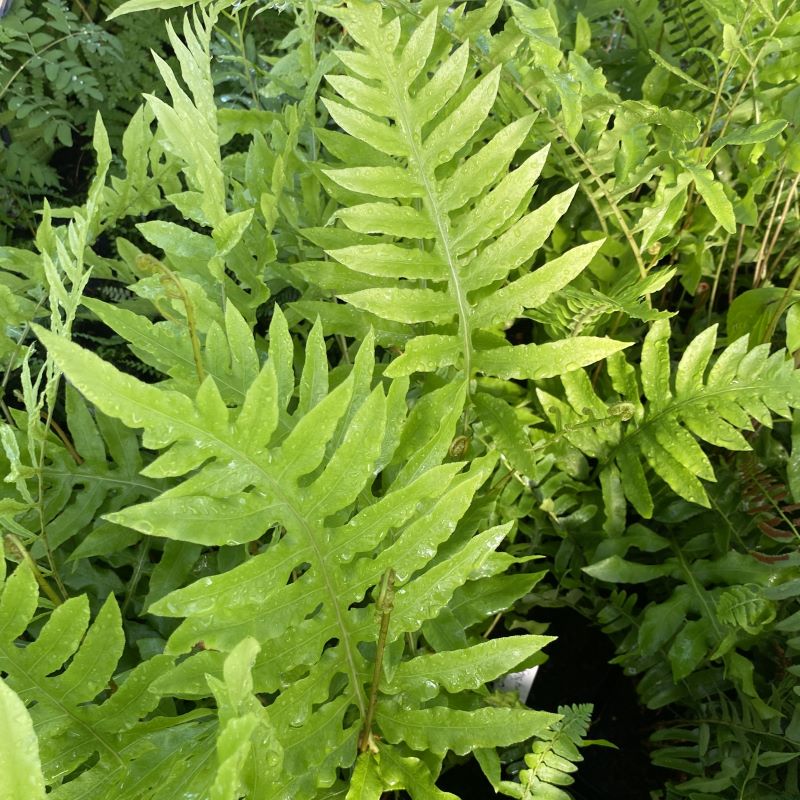
Woodwardia areolata, commonly called netted chain fern, is a deciduous fern that thrives in moist shady environments like woodland swamps across much of the eastern half of the United States. Growing to 1-2' tall with relatively wide, smooth fronds, and commonly mistaken for the similarly smooth sensitive fern (Osmunda sensibilis) netted chain fern serves as an excellent ornamental fern for wetter locations.
Tolerant of heavy shade and perpetually wet, acidic soils, Woodwardia areolata is also resistant to deer browsing and brackish soils, making it a hardy choice for any wetland area. Given the right conditions, this species will form large colonies by way of thin rhizomatic roots, making it an ideal choice for shady beds, moist woods, bog gardens, and near ponds or streams where it can help ward off erosion. In terms of visual appeal, Woodwardia areolata is a dimorphic fern, meaning that its sterile fronds have a wide, ornamental appearance, and its reproductive fronds have a narrow, crinkled appearance, adding texture and appeal to any location (you can see the difference between these fronds in the second photo on this page). Though netted chain fern does not flower, it does support a variety of beneficial native insects and serves as shelter for a number of small creatures like frogs and salamanders.