

Verbena hastata (Swamp Verbena) Unity Grown
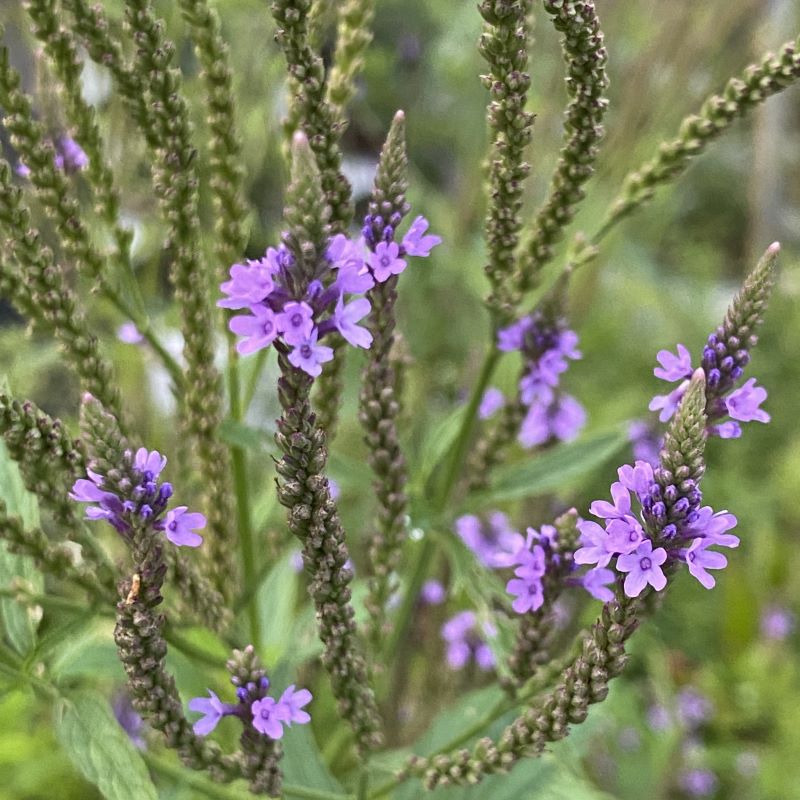
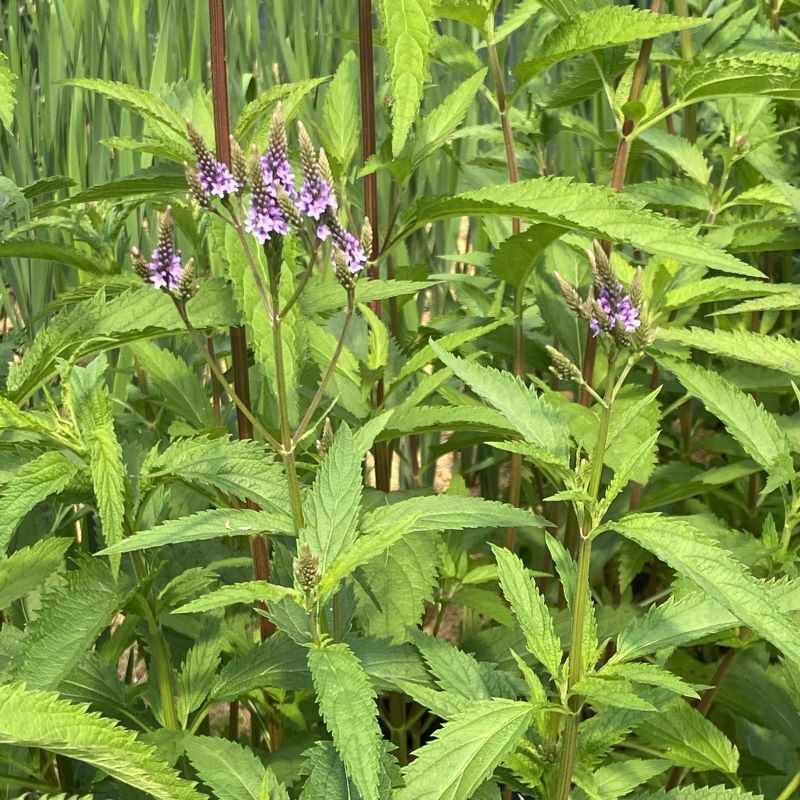
Verbena hastata, commonly called swamp verbena or blue vervain, is a thick-stemmed upright perennial wildflower which grows to large sizes of 2-6' tall and 1-2' wide, though plants can form dense colonies over time via reseeding. Swamp verbena produces numerous spikes of bluish-purple blooms from mid-summer into the fall in fountain or firework-like clusters. With individual spikes blooming from bottom to top, plants produce just a few purple flowers at a time and attract bumblebees, butterflies, and hummingbirds in the process. Beyond its general pollinator power, Verbena hastata is also a pollen source for a number of endangered butterflies like the Cobweb Skipper (Hesperia metea) and is a host plant for the caterpillar larvae of the Maryland native Common Buckeye (Junonia coenia).
As the name might imply, swamp vervain is commonly found in disturbed, wetter areas like forest margins, stream banks, or agricultural ditches, and is no stranger to wet soils and occasional flooding, so long as the water doesn't sit stagnant for too long. Over time, swamp verbena forms clumps as it slowly spreads by way of self-seeding and rhizomatic root growth, tolerating erosion and working great for rain and pollinator gardens, open meadows, and forest margin plantings.