Vernonia noveboracensis (New York Ironweed) Unity Grown
- In Stock
- Inventory on the way
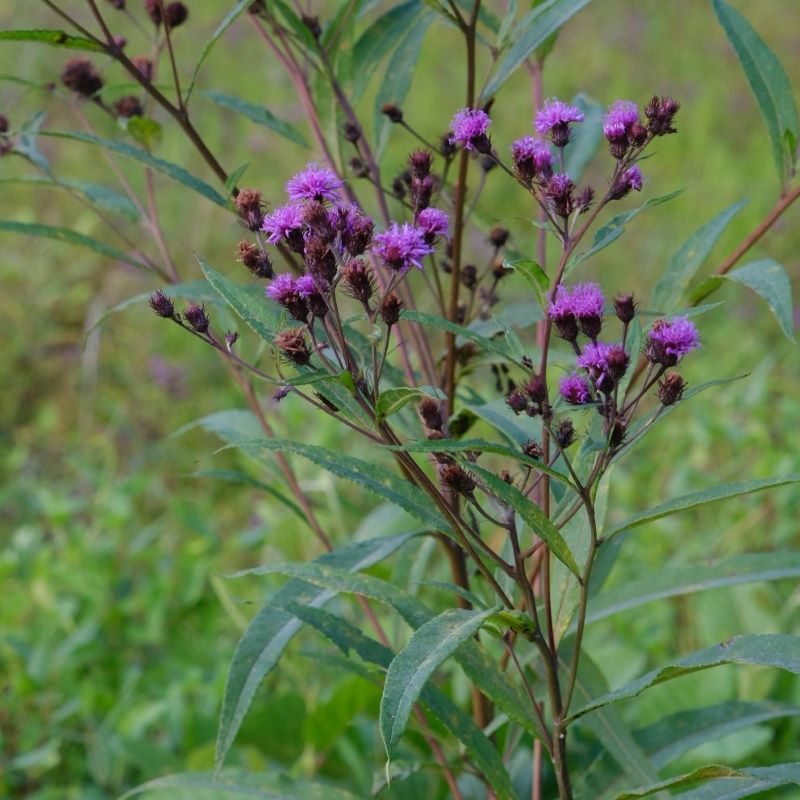
Vernonia noveboracensis, commonly referred to as New York ironweed, is a tall, clump-forming perennial wildflower noted for its towering height and its profuse, small, purple flowers that bloom in large clusters from the late summer to mid-autumn. Growing to around 4-7' tall in clumps 3-4' wide, New York ironweed is commonly found in low, open woodlands and along stream banks through much of the eastern US. Because Vernonia noveboracensis is naturally found in wetter areas in the wild, it prefers medium to wet soils, but will tolerate drier areas in the home garden as well.
Known for its showy purple blooms, New York ironweed's flower clusters are filled with dozens of fluffy-looking, thistle-like flowers that unfurl into a striking shade of fuchsia and which attract a wide range of pollinators including a number of butterflies found throughout Maryland; in the later fall and winter months, dried flowers turn to densely-packed seedheads that are highly attractive to birds. Tolerant of deer browsing, and wet, heavy clay soils, New York ironweed is a great choice for naturalizing in open-field conditions, but is equally adaptable to wildflower and pollinator plantings as well as rain gardens and berms.